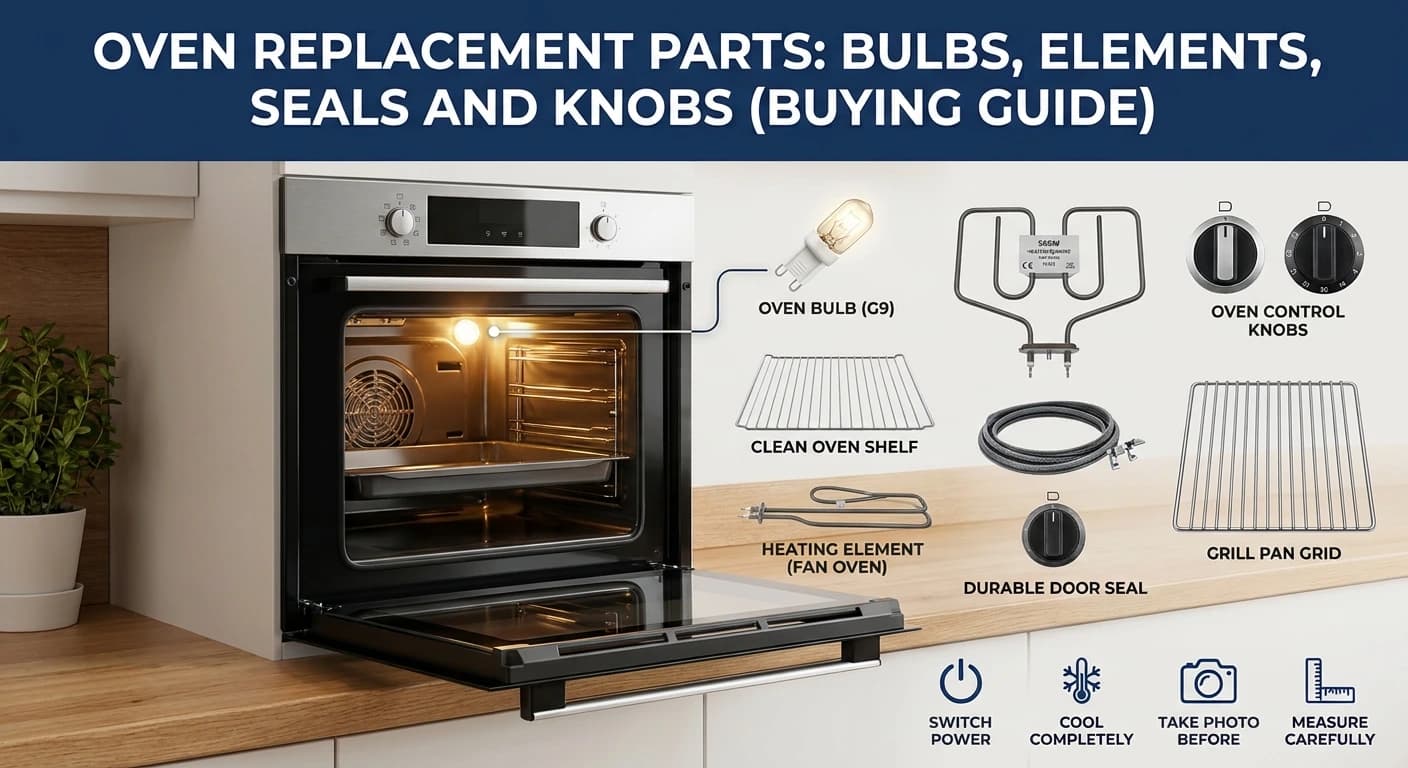
You do not need to replace your whole oven just because one small part stops working.
A blown light bulb, a damaged shelf, a loose handle or a worn door seal can make your oven harder to use. The good news? Replacing a faulty part is often much cheaper than buying a new oven, and some simple replacements take less than 30 minutes.
In this guide, we will cover eight common oven replacement parts, what they do, when you might need a new one and how to choose the right replacement for your oven.
Before You Order Any Oven Part
A little preparation can help you avoid buying the wrong part.
Find your oven's model number. Look for a label inside the door frame, around the door or on the appliance's rear panel, following the manufacturer's guidance.
Switch off the power. Isolate the electrical supply before any repair involving electrical components.
Let the oven cool completely. Parts can remain hot even after the oven is switched off.
Take a photo before removing anything. This can help you remember how the original part fits.
Check measurements carefully. Shelves, seals and glass panels must match your oven's specifications.
1. Oven Light Bulb: See Your Food While It Cooks
An oven light makes it easier to check your food without opening the door and letting heat escape. If your oven heats normally but the light stays off, the bulb may need replacing.
Before buying an oven light bulb replacement, check the fitting, wattage and temperature rating against your oven's model number. Oven bulbs are designed to withstand high temperatures, so a regular household bulb is not a suitable substitute.
Best for: Ovens with a faulty light but otherwise normal heating.
Oven Light Bulb Replacement
Replace a faulty oven light bulb with a compatible, heat-resistant bulb. Check your oven model, fitting and wattage before buying.
2. Oven Shelf: Keep Trays and Dishes Secure
An oven shelf holds baking trays, roasting dishes and oven-safe cookware at the right height. It also allows you to position food where it cooks best. A bent, rusty or unstable shelf can wobble when you place a heavy dish on it, making cooking less convenient and safe.
When choosing an oven rack replacement, measure the shelf's width and depth and check how it fits into the oven's runners. A shelf that looks similar may still be the wrong size for your appliance.
Best for: Replacing a damaged, rusty or bent oven shelf.
Oven Shelf Replacement – 466 × 385 mm
Replace a bent or damaged oven shelf with a compatible rack. Check the measurements and oven model to ensure a secure fit.
3. Fan Oven Heating Element: Get Your Oven Heating Again
A fan oven heating element produces the heat needed to cook your food. In many fan ovens, it sits around the fan at the back and helps maintain an even temperature. If your oven heats slowly, struggles to reach the selected temperature or cooks food unevenly, a faulty element could be the cause.
Before ordering an oven heating element replacement, check your oven's model number, wattage, shape and fixing points. Similar-looking elements are not always interchangeable. Because replacing an element involves electrical connections, use a qualified appliance engineer if you are not experienced with this type of repair.
Best for: Electric ovens with heating problems caused by a faulty element.
Fan Oven Heating Element – 2400W
Replace a faulty oven heating element with a compatible part. Check the wattage, model number and fixing points before ordering.
4. Oven Door Seal: Help Keep Heat Inside
An oven door seal is the heat-resistant strip around the oven opening. It helps keep hot air inside so the oven can maintain its cooking temperature. If the seal becomes cracked, flattened or loose, heat may escape around the door and affect cooking performance.
When buying an oven door seal replacement, check the model number, seal length, shape and fitting method. Some seals use clips or hooks, while others have different fixing designs. The replacement should fit neatly around the opening without gaps or twisted sections.
Best for: Ovens with worn, cracked or damaged door seals.
Main Oven Door Seal Replacement
Replace a worn or damaged oven door seal to help keep heat inside. Match the seal's shape, length and fitting style to your oven model.
5. Oven Control Knob: Make Adjusting Settings Easier
An oven control knob lets you select settings and adjust how your appliance operates. If the knob cracks, becomes loose or loses its markings, controlling the oven can become difficult. Replacing a damaged knob may be a simple way to restore everyday convenience.
Before buying an oven knob replacement, check the model number, stem shape, size and position of the markings. Some knobs use a D-shaped fitting, but designs vary between appliances. If the knob turns without controlling the oven properly, the problem may be with the internal mechanism rather than the knob itself.
Best for: Replacing a broken, loose or worn oven control knob. Any suspected gas valve or supply issue should be handled by a registered gas engineer.
Black Gas Oven Control Knob
Replace a cracked or loose oven control knob. Check the stem shape, size, markings and appliance model before buying.
6. Grill Pan Grid: Let Excess Fat Drain Away
A grill pan grid sits inside the grill pan and holds food slightly above its base. This allows fat and juices to collect underneath while food grills. It is useful for cooking sausages, bacon and other foods that release fat during cooking.
If your existing grid is bent, rusty or damaged, it may no longer hold food securely. Before buying a grill pan grid replacement, check its length, width, shape and how it sits inside your grill pan. Remember that a grill pan grid is different from a full oven shelf.
Best for: Replacing a damaged or badly worn grill pan grid.
Grill Pan Grid Replacement
Replace a bent or damaged grill pan grid to hold food above the pan and allow excess fat to drain. Check the dimensions and design before ordering.
7. Inner Oven Door Glass: Replace Cracked or Damaged Glass
The inner oven door glass forms part of the door's heat insulation system. It helps contain heat during cooking and works with the other door components to manage heat around the appliance. Cracks, chips or other damage should not be ignored.
When buying replacement oven door glass, check your oven's exact model number, glass dimensions, shape and fixing points. Different models may use different panels, even when their doors look similar. Do not use the oven with cracked or chipped door glass, as the panel may break further. Contact a qualified appliance engineer if you are unsure how to replace it safely.
Best for: Replacing cracked or damaged inner oven door glass.
Inner Oven Door Glass Replacement
Replace cracked or damaged inner oven door glass with a compatible panel. Confirm your oven model, glass dimensions and fixing points before ordering.
8. Oven Door Handle: Open and Close Your Oven Comfortably
The oven door handle gives you a secure grip when opening or closing the door to check food or remove a dish. Over time, it may become loose, crack or suffer heat damage. Replacing a damaged handle can make everyday oven use easier without replacing the entire door.
Before ordering an oven door handle replacement, check the handle's length, shape and mounting style. Measure the distance between the fixing holes and confirm compatibility with your oven model. The correct handle should line up with the existing fixing points and sit securely against the door.
Best for: Replacing a loose, cracked or damaged oven door handle.
Oven Door Handle Replacement
Replace a loose, cracked or damaged oven door handle. Check its length, fixing-hole distance and compatibility with your oven model.
Repair or Replace the Oven? A Quick Guide
As a general guide, if a repair costs a large proportion of the price of a comparable new oven, consider whether replacing the appliance makes more sense. The decision also depends on its age, condition and expected remaining lifespan.
Oven Replacement Parts: Quick Buying Checklist
Before ordering oven replacement parts, check these five things:
Model number: Make sure the part is compatible with your exact oven model.
Size and fitting: Compare dimensions, connectors and fixing points where relevant.
Specifications: Match the required wattage and other manufacturer specifications.
Part quality: Choose a genuine manufacturer part or a reputable compatible alternative.
Return policy: Check whether you can return the part if it does not fit.
Taking a few minutes to check these details can help you avoid ordering the wrong replacement.
Final Thoughts
A faulty oven part does not always mean you need a new appliance. Replacing a bulb, shelf, seal, knob or handle may be a practical way to get your oven working comfortably again.
The most important step is to check your oven's model number before ordering. Match the replacement's dimensions, fitting and specifications and do not use damaged door glass or attempt electrical or gas repairs beyond your experience.
Frequently Asked Questions
Check your oven's model number and use it to find compatible parts. Compare the part number, dimensions and specifications before ordering.
Some simple replacements may be manageable if the manufacturer allows them and you follow the instructions. Electrical and gas-related repairs may require a qualified professional.
No. Parts such as heating elements, door seals, shelves and glass panels vary by model. Always confirm compatibility before buying.
Replacing one faulty part can be cheaper than buying a new oven. However, if your oven has several major faults or is very old, compare the total repair cost with the cost of a replacement.