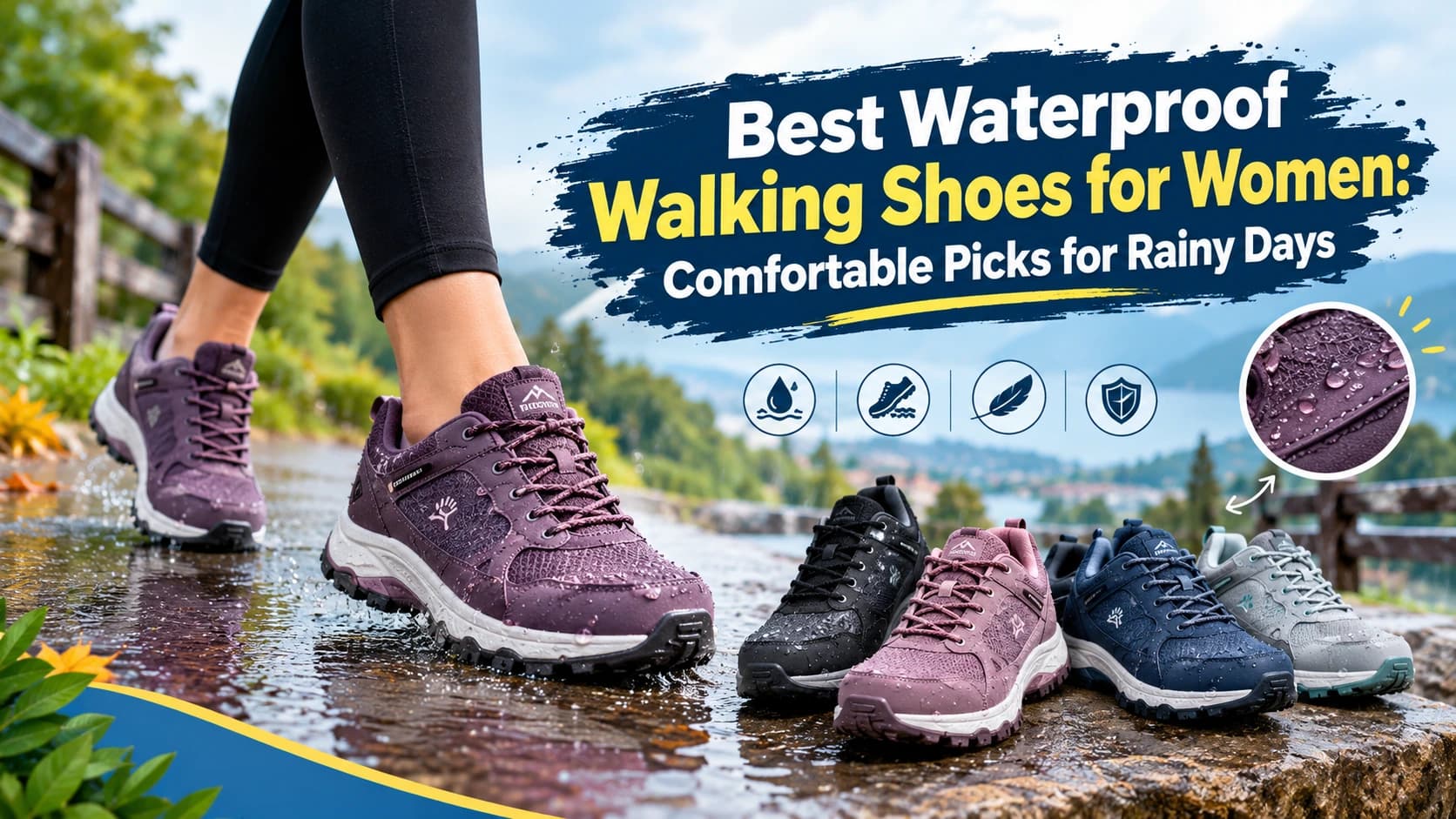
Sunny in the morning and rainy by lunch? The right shoes can make your day much easier. The best waterproof walking shoes for women help keep your feet dry while providing comfort and grip for everyday walks, commuting, and travel.
Not every waterproof shoe feels the same. Some are warmer than regular sneakers, and some may not fit wide feet comfortably. This guide explains what to look for, how to choose the right fit, and when a water shoe is a better option.
What to Look for in Waterproof Walking Shoes
Waterproof Protection
A waterproof membrane helps stop water from passing through the shoe's protected upper. Check the manufacturer's specifications, because water-resistant and waterproof do not mean the same thing. Water can also enter through the opening around your ankle.
Breathability
Waterproof shoes can feel warmer than regular mesh sneakers, especially in hot or humid weather. Choose a lightweight design and wear moisture-wicking socks. On dry days, breathable non-waterproof shoes may feel cooler.
Cushioning and Support
Look for cushioning that feels comfortable during your usual walks. A soft shoe is not automatically the best shoe, so check that the fit feels stable and supportive. If you stand for long periods, pay attention to heel comfort and pressure points.
Grip and Outsole
Wet pavements and muddy paths can be slippery. A rubber outsole with a suitable tread can help provide traction. For trails, deeper lugs may be useful, but no shoe can guarantee a slip-free walk on every surface.
Tongue and Collar
A gusseted tongue can help reduce water entering around the tongue. Low-cut shoes can still let water in from above if you step into deep puddles or walk in heavy rain.
How to Choose the Right Fit
A good fit matters as much as waterproof protection.
Wide feet: Look for a wide-width option or a roomy toe box. Do not buy a much longer size just to gain width.
Narrow heels: Choose a shoe that holds your heel securely without rubbing. Adjust the laces if needed.
High arches or flat feet: Choose the level of support that feels comfortable and stable for you. If you use orthotics, check whether the insole is removable and whether there is enough room for your insert.
Bunions or sensitive feet: Look for a roomy toe box and avoid shoes that press or rub against sensitive areas.
If you have ongoing foot pain, ask a qualified healthcare professional for footwear advice.
Which Shoes Work Best for Different Activities?
Daily City Walks
Choose a lightweight waterproof sneaker with comfortable cushioning and a flexible feel. A simple design can also work with everyday outfits.
Commuting and Work
Look for a secure fit and dependable traction. If you stand for much of the day, prioritize comfort over appearance alone.
Travel and Sightseeing
Travel often means long walks, stairs, and changing weather. Choose shoes that feel comfortable over distance and try them before your trip.
Parks and Light Trails
Look for good traction, a secure heel, and some toe protection. For uneven ground, a trail-focused shoe may be a better choice than a smooth city sneaker.
How to Get a Comfortable Fit
Use these simple checks when trying on shoes:
Try them later in the day, when your feet may be slightly larger.
Wear the socks you normally use for walking.
Make sure your toes have room and do not press against the front.
Check that the heel feels secure without rubbing.
Walk around and notice any pinching, stiffness, or slipping.
Bring your usual orthotics or inserts, if you use them.
A shoe should feel comfortable when you try it on. Do not rely on a long break-in period to fix pressure points.
Are Waterproof Walking Shoes Good in Hot Weather?
They can be, but waterproof membranes may reduce airflow compared with open mesh. To stay more comfortable, choose a lightweight model, wear moisture-wicking socks, and let shoes dry fully between uses. If rain protection is unnecessary, a regular breathable sneaker may be cooler.
How Much Should You Spend?
Budget shoes: May suit occasional walks, but check whether they are waterproof or only water-resistant.
Mid-range shoes: May offer more choices in cushioning, tread, and waterproof construction.
Premium shoes: May use specialized membranes or trail-focused materials, but a higher price does not guarantee a better fit.
Compare the specifications, return policy, warranty, and current price before buying. Prices can change by retailer, size, and color.
Common Mistakes to Avoid
Choosing style over comfort.
Assuming water-resistant means fully waterproof.
Buying a longer size instead of a wider fit.
Ignoring traction on wet surfaces.
Wearing damp shoes repeatedly instead of letting them dry.
Assuming waterproof protection will last forever; materials can wear down over time.
How to Care for Waterproof Walking Shoes
Brush off loose dirt and mud after walks.
Clean the upper with a soft cloth and a suitable mild cleaner.
Remove the insoles only if the manufacturer allows it.
Air-dry shoes away from direct heat.
Use only cleaning products approved for the shoe's materials.
Check the outsole, seams, and upper for wear.
Water Shoes vs. Waterproof Walking Shoes
Waterproof walking shoes are designed to keep water out, while water shoes are made to get wet and dry quickly. For rainy commutes and city walks, choose footwear with clearly stated waterproof construction. For beaches, pools, and boat decks, water shoes may be more suitable.
The two products below are water-shoe alternatives, not waterproof walking shoes. Consider them for warm-weather water activities rather than as replacements for waterproof footwear.
1. Speedo Tidal Cruiser Water Shoe (Women’s)
Best for: Beach walks, pools, and casual water activities.
Pros
Affordable option for casual water activities.
Breathable mesh helps it dry quickly.
Lightweight and easy to pack for trips.
Cons
Not waterproof; water can enter the shoe.
Limited cushioning and arch support for long walks.

Speedo Tidal Cruiser Water Shoes for Women – Quick-Drying Comfort
Enjoy beach days and water activities with the Speedo Tidal Cruiser Water Shoes for Women. Featuring a breathable mesh upper for quick drying, a comfortable neoprene collar, and an easy slip-on design, these shoes are ideal for poolside walks, beach outings, and wet environments.
2. OluKai Kialoa Water Shoe (Women’s)
Best for: Boat decks, wet docks, and travel.
Pros
Designed for grip on wet surfaces.
Cushioned midsole for walking comfort.
Quick-drying mesh and a washable footbed.
Cons
More expensive than basic water shoes.
Not waterproof and offers limited warmth in cold weather.

OluKai Kialoa Water Shoes for Women – Comfort and Wet-Surface Traction
Stay comfortable during your next water adventure with the OluKai Kialoa Water Shoes for Women. Designed with a breathable, quick-drying mesh upper and traction suited to wet surfaces, these shoes are a practical choice for boat decks, docks, and beach outings. Their convenient slip-on design makes them easy to wear for activities in and around the water.
Quick Comparison
Feature | Speedo Tidal Cruiser | OluKai Kialoa |
Best for | Beach and pool days | Docks, boats, and travel |
Upper | Breathable mesh | Quick-dry mesh with TPU overlays |
Cushioning | Basic | Cushioned EVA midsole |
Traction | Standard water-shoe use | Wet-Grip Rubber outsole |
Waterproof? | No | No |
Previously listed price | $31.50 | $130 |
Choose it if | You want a simple, budget-friendly water shoe | You want more cushioning and wet-surface grip |
Prices and availability can change. Check the retailer's product page before purchasing.
Final Thoughts
The best waterproof walking shoes for women should fit well, feel comfortable, and suit where you plan to walk. Prioritize cushioning for city walks and travel, and look for stronger traction for trails. Before buying, check the manufacturer's waterproof specifications and try the shoes with your usual socks. If you mainly need footwear for beaches or pools, choose water shoes instead.
Frequently Asked Questions
Look for clearly stated waterproof construction, comfortable cushioning, reliable traction, and a fit that suits your foot shape.
They can feel warmer than regular sneakers. Choose a lightweight design and moisture-wicking socks, or wear breathable non-waterproof shoes when rain protection is not needed.
Yes, they can be useful for sightseeing and rainy days. Choose a pair that feels comfortable for long walks and try them before your trip.