Dark kitchen counters, dim pantry shelves, and poorly lit cabinets can make everyday tasks harder than they need to be. Installing traditional under-cabinet lighting may require drilling, electrical work, or visible power cables.
Rechargeable motion-sensor LED light bars offer a simpler solution. They attach beneath cabinets or inside storage spaces, provide light when movement is detected, and can be removed for recharging. Many models use magnetic mounting strips, making them convenient for renters and homeowners who want to avoid permanent installation.
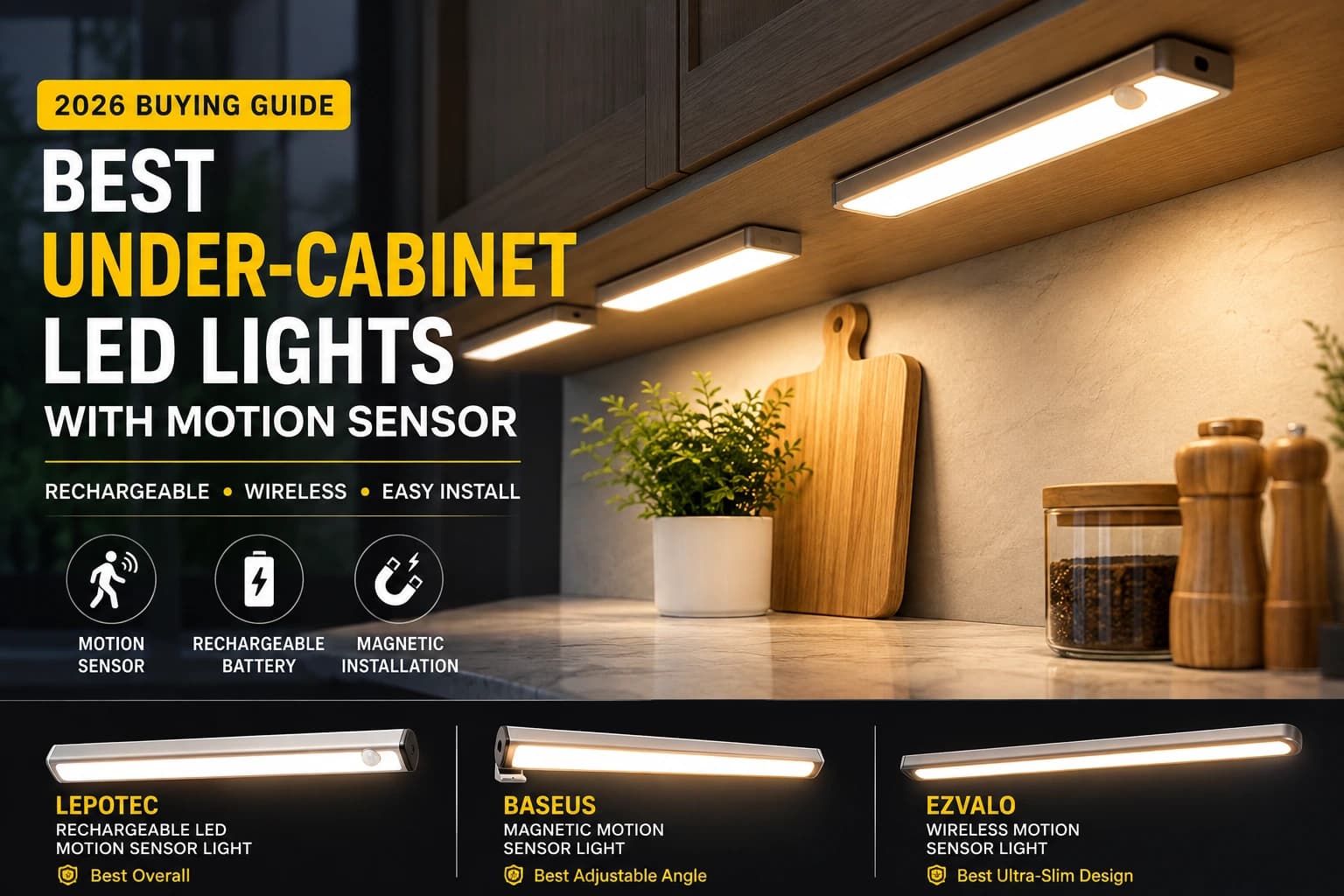
In this guide, we compare three popular options from LEPOTEC, Baseus, and EZVALO. We’ll look at their main features, advantages, limitations, and the factors to consider before choosing a light for your home.
1. LEPOTEC Rechargeable LED Motion Sensor Light: Best for Everyday Use
The LEPOTEC rechargeable LED light bar is worth considering if you need extra lighting beneath kitchen cabinets, above a worktop, or inside a dark pantry. Its slim bar design provides a practical way to brighten areas where ceiling lights may leave shadows.
Key Features
Motion Sensor: Turns on automatically when it senses movement.
Rechargeable Design: Easy to recharge, so you don’t need to keep buying new batteries.
Magnetic mounting: Compatible mounting strips can make installation and removal easier.
Multiple lighting modes: Some versions offer motion-sensor and always-on settings.
Pros
Useful for kitchen counters, cupboards, and pantry shelves.
Convenient removable design for charging.
Helps illuminate dark areas without permanent wiring.
Cons
May be more noticeable beneath shallow cabinets than an ultra-slim model.
Battery life depends on brightness, usage, and the exact version.
Adhesive mounting may not hold well on dirty, uneven, or unsuitable surfaces.
Who Should Choose It?
Choose the LEPOTEC light bar if you want practical everyday lighting and prefer a rechargeable option that can be mounted without complex electrical work.
{{embed}}
2. Baseus Magnetic Motion Sensor Light: Best for Adjustable Lighting
Sometimes a light needs to do more than simply switch on. You may want to direct the beam toward a chopping board, recipe book, desk, or another specific area. A Baseus magnetic motion-sensor light may suit these needs if you choose a version with an adjustable mount and dimming controls.
Key Features
Adjustable light direction: Models with a rotating mount let you direct light toward the area that needs it.
Brightness control: Dimmable versions allow you to choose a softer glow or brighter task lighting.
Rechargeable battery: Offers cordless convenience for locations without nearby outlets.
Magnetic mounting: Makes it easier to remove the light for charging or repositioning.
Pros
Adjustable lighting can help reduce unwanted glare.
Dimming gives you more control over brightness.
Suitable for kitchen counters, desks, and other work areas.
Cons
Maximum brightness may affect battery runtime.
Adjustable mounts can add bulk compared with simpler light bars.
Features such as rotation and touch dimming depend on the specific model.
Who Should Choose It?
Consider Baseus if you want more control over where the light falls and how bright it appears. Before buying, confirm that the selected version includes the adjustable mount and dimming features you need.
{{embed}}
3. EZVALO Wireless Motion Sensor Cabinet Light: Best for a Slim, Discreet Design
If you prefer lighting that stays out of sight, an EZVALO wireless cabinet light may be a good option. Slim light bars can fit neatly beneath cabinets, inside wardrobes, and along pantry shelves without making the space look cluttered.
Key Features
Compact design: A slim profile can make the light less noticeable when installed.
Motion activation: Compatible models switch on when movement is detected.
Magnetic installation: A suitable magnetic mounting strip allows convenient removal.
Rechargeable operation: Helps reduce dependence on disposable batteries.
Pros
Discreet appearance beneath cabinets and shelves.
Convenient for closets, pantry spaces, and nighttime use.
Cordless installation keeps the area looking tidy.
Cons
A slim model may provide less light than a larger, brighter bar.
Sensor sensitivity and automatic shutoff timing vary by version.
May not provide enough illumination for larger food-preparation areas.
Who Should Choose It?
Choose EZVALO if appearance and space-saving design matter most. For a kitchen counter used for detailed food preparation, compare the actual lumen output with brighter alternatives before making your decision.
{{embed}}
Key Features to Consider Before Buying
The right under-cabinet light should match the space, the tasks you perform, and how often you want to recharge it.Here’s what to look for before buying.
1. Brightness and Lumens
Lumens indicate how much visible light a product produces. Higher lumen output can be useful for food preparation, while softer lighting may be enough for a pantry or nighttime navigation.
However, brightness is not the only factor. The length of the light bar, its position, and how evenly it spreads light also affect the result.
Buying tip: Compare the advertised lumen output of each exact model rather than judging brightness by LED count alone.
2. Motion Sensor and Lighting Modes
Motion sensors help turn the light on when you need it without requiring you to find a switch. Some lights come with different settings to suit your needs.
Night mode: The light activates when movement is detected in low-light conditions.
Day-and-night mode: The light can activate whenever movement is detected, even in a brighter room.
Always-on mode: Useful when you need continuous illumination instead of automatic activation.
Check the sensor's detection range and automatic shutoff timing. A sensor that is too sensitive may activate unnecessarily, while a short detection range may not cover the area you need.
3. Battery Capacity and Charging
Rechargeable lights are convenient because you do not need to keep replacing disposable batteries. However, battery capacity alone does not tell you exactly how long a light will last.
Runtime depends on brightness, how frequently the sensor activates, battery condition, and the product's power consumption.
Look for a clearly listed battery capacity and charging method. USB-C can be convenient, but confirm the port type on the exact model rather than assuming every rechargeable light uses it.
Buying tip: If the light will be used frequently throughout the day, prioritize easy recharging and a manufacturer-provided runtime estimate.
4. Warm, Neutral, or Cool White Light
Color temperature affects the atmosphere and appearance of your kitchen.
Warm white: Creates a softer, cozier look for cabinets, closets, and nighttime lighting.
Neutral white: Offers a balanced appearance that works well in many everyday spaces.
Cool white: Provides a crisp look that some people prefer for task-focused areas.
Color temperature is measured in kelvins (K). Around 3000K generally appears warm, while 6000K appears much cooler. If you want flexibility, consider a model with adjustable color temperature.
5. Installation and Mounting
Magnetic light bars can be easier to install than hardwired fixtures, but the mounting surface matters. Dust, grease, moisture, and uneven finishes can weaken adhesive.
Before installation:
Clean and dry the mounting surface.
Check that the adhesive is suitable for the cabinet material.
Follow the manufacturer's instructions for attaching the mounting strip.
Position the light so it illuminates the work surface without shining directly into your eyes.
Confirm that you can remove the light easily when it needs charging.
If you have delicate cabinetry, test the mounting method carefully to reduce the risk of surface damage.
6. Size and Light Coverage
Measure the available space before ordering. A short light bar may work well inside a small cupboard but leave shadows across a long countertop.
For wider worktops, consider whether one longer bar or several smaller lights will provide more even coverage. Also check the fixture's thickness if you want it hidden beneath a cabinet lip.
If you're upgrading your kitchen, check out our Mueller Pro-Series 10-in-1 Vegetable Chopper review to learn more about another practical kitchen tool.
Rechargeable vs. Plug-In vs. Hardwired Under-Cabinet Lights
Each type has advantages, so the best choice depends on your installation preferences and lighting needs.
Lighting Type | Main Advantage | Main Limitation |
Rechargeable wireless lights | Easy installation and no permanent power cable | Need periodic recharging |
Plug-in lights | Continuous power without routine battery charging | Require a nearby outlet and cable management |
Hardwired lights | Permanent, integrated installation | May require electrical work and professional installation |
For renters or anyone who wants a quick upgrade, rechargeable light bars can be the most convenient starting point. If you need bright lighting for long periods every day, a plug-in or hardwired fixture may be more practical.
Where Can You Use Motion-Sensor LED Light Bars?
These lights are not limited to kitchen cabinets. Their cordless design makes them useful in several areas around the home.
Kitchen counters: Add light to work surfaces that are shadowed by upper cabinets.
Pantry shelves: Make it easier to find ingredients without switching on the main kitchen light.
Wardrobes and closets: Illuminate clothing, shoes, and storage boxes.
Hallways and stair areas: Provide convenient low-level lighting, provided the product is suitable for the location.
Garage storage: Brighten shelves and tool cupboards where extra light is helpful.
Always follow the manufacturer's guidance about moisture, heat, and suitable installation locations. Standard indoor cabinet lights should not be assumed to be waterproof. For more ideas on keeping your living space tidy, explore our home organization tips for 2026 to discover simple ways to declutter and organize your home.
You can also explore our guide to daily essentials for home and work in 2026 to discover more useful products for everyday life.
Final Verdict
Rechargeable motion-sensor under-cabinet LED lights offer a convenient way to brighten dark counters, cupboards, and pantry shelves without installing permanent wiring.
The LEPOTEC light bar is worth considering for everyday lighting, Baseus may suit users who want adjustable brightness or light direction, and EZVALO is an option for those who prefer a discreet design. Make sure the exact model includes the features you need before purchasing.
Compare brightness, battery runtime, sensor modes, charging requirements, and mounting options before deciding. The best light is not necessarily the brightest or the slimmest one; it is the one that provides suitable illumination for your space with the least hassle.
Explore More Home Lighting Options
Looking for more lighting products for your home? Explore our collection of Baseus products to discover other options for your everyday needs.
Explore Baseus Lighting & Home Gadgets
Discover useful Baseus products for your home and everyday needs. Explore the available collection to find lighting solutions, smart accessories, and other practical gadgets.
Frequently Asked Questions
Most modern LED light bars use a two-part magnetic system. An adhesive 3M iron strip sticks to your cabinet surface and the light bar snaps magnetically onto the strip. This allows for quick removal when recharging.
In automatic motion-sensor mode (activating 5–10 times daily), a standard 1,500 mAh to 2,500 mAh battery typically lasts between 2 to 4 weeks before needing a USB recharge.
Most models feature a "Night Motion Mode" that uses a photo-sensor to detect ambient light, ensuring they only turn on when the surrounding area is dark.